Real Estate Information Archive

Blog

Displaying blog entries 1-10 of 19

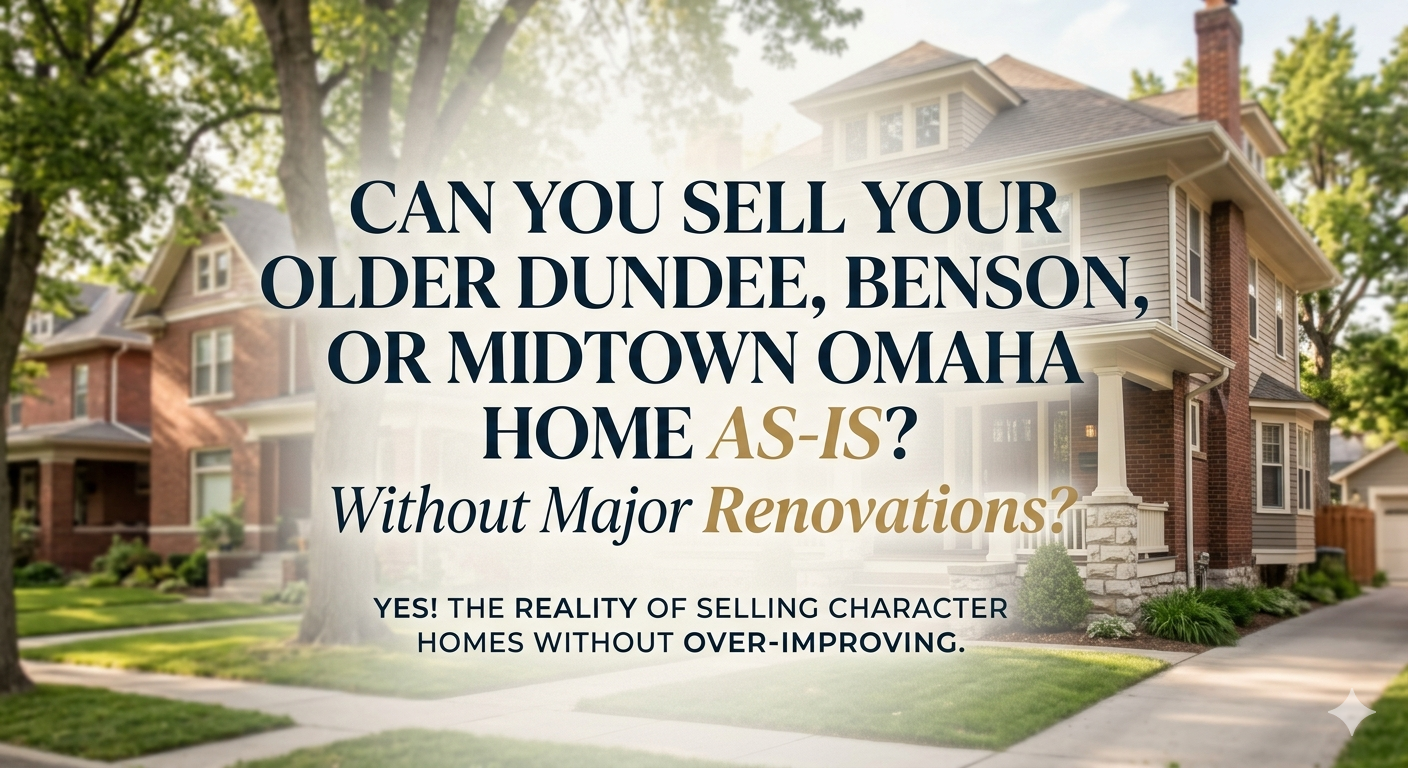
A lot of Omaha sellers are quietly asking the same question right now: do I really have to renovate this older house before I sell it? And if your home is in Dundee, Benson, Midtown Omaha, or another established area in Omaha, that question becomes even more personal.

Maybe the original woodwork is stunning, but the kitchen hasn’t been touched in 30 years. Maybe the home has incredible character, but the electrical or plumbing systems are older. Maybe you know buyers love the location, but the idea of pouring $30,000–$80,000 into renovations right before you leave just doesn’t sit right. That tension is exactly where many Omaha homeowners get stuck.

The honest answer is yes, you can absolutely sell an older Omaha home as-is. Homes sell this way every single day. But the real conversation isn’t just “can you?” It’s “should you?” and more importantly, “what’s the smartest way to do it so you don’t leave money on the table?”

What “As-Is” Actually Means in Omaha

There’s a common misconception that “as-is” means doing nothing and just putting the house on the market. That’s not really how it works, especially in older Omaha neighborhoods where buyers are paying close attention.

Selling as-is simply means you’re choosing not to take on major renovations or upgrades before listing. You’re not remodeling the kitchen, you’re not gutting bathrooms, and you’re not trying to make the home look like new construction. But that doesn’t mean you skip preparation entirely.

In fact, the most successful as-is sales still involve thoughtful prep. Sellers who do well in Dundee, Benson, and Midtown understand that presentation still matters. Deep cleaning, decluttering, improving lighting, and making small repairs go a long way toward helping buyers emotionally connect with the home.

Buyers don’t expect perfection in these neighborhoods. They expect authenticity. But they also want to feel like the home has been cared for, not neglected.

Why Older Omaha Neighborhoods Are Different

One of the biggest advantages you have as a seller in these areas is that you’re not competing in the same way as newer subdivisions. Buyers looking in Dundee or Midtown aren’t usually cross-shopping brand-new builds in West Omaha. They’re looking specifically for character, location, walkability, and history.

That changes the entire conversation.

A buyer considering a 1920s home in Dundee already knows it won’t have the same layout or finishes as a 2022 build. They’re okay with that. In fact, that’s often the reason they’re shopping there in the first place. They want the charm, the mature trees, the established feel of the neighborhood.

But that doesn’t mean the condition doesn’t matter. It just means buyers evaluate condition differently. They’re asking questions like: has this home been maintained over time? Are the big systems functional? Does anything feel like a hidden problem?

That’s where your strategy matters more than the actual level of renovation.

Where Sellers Typically Overspend (And Regret It)

This is where a lot of Omaha sellers unintentionally lose money. They assume they need to fully modernize their home to compete. So they start pricing out kitchen remodels, bathroom upgrades, new flooring, and cosmetic overhauls.

The problem is, those projects don’t always return what you think they will.

In older neighborhoods, buyers often have their own vision. If you install a mid-range kitchen, the next buyer may still plan to renovate it later to match their taste. That means you paid for an upgrade that didn’t fully translate into a higher sale price.

We’ve seen sellers spend tens of thousands of dollars trying to “keep up,” only to realize later that the market would have accepted the home with much simpler improvements.

The reality is, the highest-return updates are usually the least glamorous ones. Clean homes sell better. Bright homes feel larger. Well-maintained homes create trust. Those factors influence buyer perception more than whether your countertops are quartz or laminate.

What Actually Matters to Buyers Right Now

If you’re selling an older home as-is in Omaha, buyers are usually focusing on a few key things, whether they say it out loud or not.

They’re looking at the overall condition first. Does the home feel solid? Does anything seem neglected? Even small issues can raise bigger concerns for a buyer if the home feels poorly maintained.

They’re paying attention to major systems. Roof, HVAC, electrical, and plumbing matter more than cosmetic finishes. A dated kitchen is easier to live with than an unknown furnace.

They’re evaluating layout and livability. Some older homes have quirks that buyers love, while others feel harder to work with. This doesn’t mean you need to change the layout, but it does mean you need to understand how buyers will perceive it.

And most importantly, they’re comparing value. Buyers are always mentally stacking your home against others in the same price range. If a nearby home is fully renovated and yours is not, that difference has to show up in the price.

A Real-World Example From Midtown Omaha

One Midtown seller we worked with owned a beautiful older home with incredible original woodwork and a great location, but the kitchen and bathrooms were clearly outdated. They initially felt pressure to renovate before listing because they had seen nearby homes selling for higher prices.

After looking closely at the comps, we realized something important. The fully renovated homes that sold at the top of the market had significantly larger budgets and complete updates throughout. Matching that level would have required a much bigger investment than they were comfortable making.

Instead of over-renovating, we focused on making the home feel clean, well-cared-for, and honest. We addressed a few small repairs, improved lighting, and ensured everything looked move-in ready, even if it wasn’t updated.

We priced the home strategically based on its condition, not based on the highest sale in the neighborhood. The result was strong interest from buyers who specifically wanted a Midtown home with character and were excited to update it over time.

That’s the difference between guessing and having a clear strategy.

The Pricing Conversation (Where Most As-Is Sales Go Wrong)

If there’s one area where as-is sales fall apart, it’s pricing.

Some sellers hear “you can sell as-is” and assume it means they can price their home as if it were fully renovated. That’s where frustration starts. The home sits. Showings slow down. Price reductions follow. And suddenly, the listing feels stale.

Buyers today are informed. They’ve seen the renovated homes. They’ve walked through them. They understand the difference in condition, and they price that difference in immediately.

That doesn’t mean you have to aggressively discount your home. It just means the pricing needs to reflect reality. When it does, you often create more interest, more competition, and ultimately a stronger outcome.

In many cases, a well-priced as-is home can generate multiple offers, especially in desirable neighborhoods like Dundee and Benson where inventory is limited.

Should You Ever Renovate Before Selling?

There are situations where light updates make sense. If a home has obvious cosmetic issues that create a negative first impression, addressing those can help significantly. Things like worn paint, outdated fixtures, or poor lighting can make a home feel more dated than it actually is.

But full renovations are a different conversation.

Before committing to a major project, it’s important to ask a simple question: will this investment clearly increase my net profit after costs, time, and risk? In many Omaha cases, the answer is no, especially in older neighborhoods where buyers expect some level of customization.

The smarter move is often selective improvement combined with strong market positioning.

The Emotional Side of Selling an Older Home

There’s also something else that doesn’t get talked about enough. Selling an older home, especially one you’ve lived in for years, is emotional.

These homes often carry history. Memories. A sense of identity. The idea of “fixing everything” before selling can feel overwhelming, both financially and mentally.

Selling as-is can actually be a relief when it’s done the right way. It allows you to move forward without taking on a major project at the end of your time in the home. It also allows the next owner to bring their own vision to the property, which is often part of the appeal in these neighborhoods.

How the Heim-Berg Team Approaches As-Is Sales in Omaha

This is where having the right guidance matters. The Heim-Berg Team is a real estate team in Omaha, Nebraska helping sellers navigate decisions like this every day. Instead of pushing renovations or defaulting to “just list it,” the focus is on understanding your specific home, your timeline, and your financial goals.

Every home is different. Every seller is in a different situation. The goal is to help you make a decision that actually makes sense for you, not just what sounds good in theory.

Sometimes that means recommending a few targeted updates. Sometimes it means confidently going to market as-is. And sometimes it means waiting altogether if that creates a better outcome.

So, Can You Sell As-Is in Dundee, Benson, or Midtown?

Yes, you can. And in many cases, it’s the smartest move.

But the success of that decision depends on how you prepare, how you price, and how you position the home in the market. It’s not about doing nothing. It’s about doing the right things and avoiding the expensive mistakes that don’t pay off.

If you own an older home in Dundee, Benson, Midtown, or anywhere in Omaha and you’re trying to figure out your next step, a simple conversation can usually bring a lot of clarity.

The Heim-Berg Team | Omaha, NE | Ambassador Real Estate, Berkshire Hathaway HomeServices | 402-677-9024 can help you look at your home objectively, understand what buyers will actually respond to, and decide what’s worth doing before you list and what you can confidently leave alone.


If you opened your 2026 valuation notice and felt your stomach drop, you are not alone. Omaha homeowners have been actively discussing sharp valuation jumps this spring, which immediately raises the next question: Should you stay put, protest the value, or use this moment to sell while your equity position feels strong? It’s a smart question, and it deserves a real answer instead of a panicked one.

Here’s the part most homeowners miss: a higher county valuation does not automatically mean your home will sell for that exact number, and it also does not automatically mean you should rush to list. County valuations, buyer demand, neighborhood inventory, condition, layout, updates, and timing all matter separately. In other words, a valuation notice is a signal, not a sales strategy.

For sellers in places like West Omaha, Elkhorn, Millard, and Papillion, this is where emotions can get expensive. Some owners see the number and think, “Great, I should cash out now.” Others think, “If values jumped this much, I can probably price even higher.” Both reactions can backfire. Buyers are still paying attention to condition, location, and whether a home feels worth the ask. 

So when does a valuation jump actually become a reason to sell? Usually when it lines up with a life change that is already pushing you toward a move. Maybe you are tired of maintaining a larger house. Maybe property taxes feel heavier than they did a few years ago. Maybe your kids are gone and you are paying for space you barely use. Maybe you would rather redeploy your equity into a ranch, a townhome, or a lower-maintenance lifestyle. That is a real conversation. What is not a great reason to sell is pure fear without a plan.

There is also a difference between “my taxes are frustrating” and “selling is my best financial move.” If the house still fits your life, your mortgage is comfortable, and you love your neighborhood, selling just because the valuation moved may create more disruption than benefit. On the other hand, if you were already halfway out the door, the valuation notice can be the nudge that finally gets you serious about reviewing your options. That review should include the likely sale price, estimated net proceeds, replacement-housing cost, and whether you would be happier east, west, or outside the metro core.

If you’re trying to figure out whether your new valuation is a reason to stay, protest, or sell, we can help you look at the bigger picture. We’ll help you compare your county value to real neighborhood sales, talk through your timing, and figure out whether selling actually improves your situation. Heim-Berg Team | Ambassador Real Estate, Berkshire Hathaway HomeServices | 402-677-9024.

If you’re thinking about downsizing your home in Omaha, you’re probably feeling a mix of excitement and uncertainty.

Maybe the house feels too big now.
Maybe maintenance is becoming a burden.
Or maybe you’re ready for a simpler, more flexible lifestyle.

Here’s the truth: downsizing isn’t just about moving into a smaller home—it’s about finding the right size for your next stage of life.

This guide will walk you through exactly how to downsize in today’s Omaha market, what to watch out for, and how to make a move that actually improves your lifestyle.


What Downsizing Looks Like in Omaha Right Now

The Omaha real estate market is still active, but it’s more balanced than the fast-paced years we saw recently.

Here’s what we’re seeing locally:

  • Well-maintained homes in established neighborhoods (like Millard, Elkhorn, and West Omaha) are still attracting strong buyer interest
  • Buyers are more selective—pricing and condition matter more than ever
  • Smaller homes, ranch-style properties, and townhomes are in high demand, especially for downsizers
  • New construction villa communities are popular, but inventory can be limited

What this means for you:

👉 You can likely sell your current home successfully
👉 But finding the right next home takes strategy and planning


Step 1: Define What “Right Size” Means for YOU

Most people think downsizing means “smaller.”

That’s not always true.

Instead, ask yourself:

  • Do I want less maintenance?
  • Do I want everything on one level?
  • Do I want to be closer to family, healthcare, or amenities?
  • Do I want to free up equity for travel or retirement?

For some homeowners in Omaha, “right sizing” looks like:

  • Moving from a 2-story to a ranch-style home
  • Trading square footage for a better location
  • Choosing a townhome or villa with HOA maintenance
  • Moving closer to areas like Aksarben, Midtown, or Village Pointe

The goal isn’t smaller—it’s simpler and more aligned with your lifestyle.


Step 2: Understand Your Equity and Buying Power

Before making any decisions, you need clarity on your numbers.

This includes:

  • Your home’s current value (based on recent Omaha sales—not online estimates)
  • Your remaining mortgage balance
  • Your estimated net proceeds after selling
  • What that translates to for your next purchase

Many Omaha homeowners are surprised to learn:

👉 They have more equity than they thought
👉 They may be able to buy their next home with little or no mortgage

This step removes uncertainty and gives you real options.


Step 3: Explore Downsizing Options in Omaha

There’s no one-size-fits-all solution, but here are the most common paths we see:

1. Ranch-Style Homes

  • Single-level living
  • Popular in West Omaha, Millard, and Papillion areas
  • Great for long-term accessibility

2. Townhomes & Villas

  • HOA covers lawn care and snow removal
  • Ideal for low-maintenance living
  • Common in Elkhorn, Gretna, and newer developments

3. New Construction Villas

  • Modern layouts and energy efficiency
  • Often designed specifically for downsizers
  • May require waiting due to build timelines

4. Condos (Less common, but available)

  • Lower maintenance
  • Often closer to urban areas like Midtown or Downtown Omaha

Each option has trade-offs in terms of cost, lifestyle, and availability.


Step 4: Time the Sale and Purchase Correctly

This is where many downsizers feel stuck.

The biggest concern:

👉 “What if I sell my home and don’t have somewhere to go?”

In Omaha, we typically use one of these strategies:

Option 1: Sell First, Then Buy

  • Most common and safest financially
  • May require temporary housing

Option 2: Buy First, Then Sell

  • Works if you have strong equity or financing options
  • Less disruption, but more financial coordination

Option 3: Contingent Offer

  • Buy your next home contingent on selling your current one
  • Depends on market conditions and seller flexibility

The right approach depends on your finances, timeline, and comfort level.


Client Story #1: Simplifying Life After the Kids Moved Out

A couple in West Omaha came to us after their kids had moved out.

Their home:

  • 4 bedrooms
  • Two stories
  • More space than they needed

Their concern:
They didn’t want to “downgrade”—they wanted to upgrade their lifestyle.

What we did:

  • Helped them understand their equity position
  • Identified villa communities with main-floor living
  • Sold their home with minimal prep (just paint and staging)

Result:

  • They moved into a smaller home
  • Reduced maintenance significantly
  • Freed up equity for travel

Their words:

“We didn’t feel like we downsized—we felt like we simplified.”


Client Story #2: Planning Ahead for Accessibility

Another homeowner in Omaha wanted to be proactive.

They weren’t forced to move—but they saw the future coming.

Their concerns:

  • Stairs becoming an issue later
  • Wanting to stay independent long-term

What we did:

  • Found a ranch-style home with zero-entry access
  • Coordinated timing so they didn’t feel rushed
  • Helped them avoid over-improving their current home before selling

Result:

  • Smooth transition
  • Long-term peace of mind
  • No urgent decisions later

Common Downsizing Mistakes in Omaha

Here are the biggest mistakes we see:

1. Waiting Too Long

Many homeowners wait until a move becomes necessary instead of strategic.

2. Underestimating the Emotional Side

Downsizing isn’t just financial—it’s personal.

3. Over-Renovating Before Selling

You don’t need a full remodel to get a strong price in Omaha.

4. Not Exploring Enough Options

Inventory can vary—especially for villas and ranch homes.

5. Focusing Only on Price

The cheapest option isn’t always the best lifestyle fit.


How to Make Downsizing Easier

Here’s a simple approach that works:

  1. Start with a conversation—not a commitment
  2. Get a clear home value and equity breakdown
  3. Explore options before listing your home
  4. Build a flexible plan (not a rushed one)
  5. Move when it makes sense for your life—not just the market

FAQ: Downsizing in Omaha, NE

Is now a good time to downsize in Omaha?

It can be—especially if you have significant equity and a clear plan. The key is aligning timing with your goals.

What types of homes are best for downsizers?

Ranch homes, villas, and townhomes are the most popular options in Omaha.

Do I need to sell before I buy?

Not always, but many downsizers choose to sell first to reduce financial stress.

How long does the downsizing process take?

Typically 2–4 months depending on preparation, timing, and availability of your next home.

Are there downsizing-friendly neighborhoods in Omaha?

Yes—West Omaha, Elkhorn, Millard, and some Midtown areas offer strong options depending on your lifestyle.


Your Next Step

Downsizing doesn’t have to feel overwhelming.

When done right, it can give you:

  • More freedom
  • Less maintenance
  • A home that actually fits your life today

The Heim-Berg Team is part of Ambassador Real Estate, Berkshire Hathaway HomeServices, helping homeowners in Omaha, Nebraska navigate transitions like this every day.

If you’re even thinking about downsizing, the best first step is simple:

👉 Get clarity on your options

  • What your home is worth
  • What your next move could look like
  • What timing makes the most sense

Heim-Berg Team
Real Estate Professionals – Omaha, NE
Ambassador Real Estate, Berkshire Hathaway HomeServices
📞 402-677-9024

In today’s Omaha real estate market, one truth remains constant: your first impression is your strongest advantage. And once it’s missed, it’s incredibly hard to recover.

Many sellers assume that if a home isn’t getting offers, the solution is simple—reduce the price. But in reality, price reductions are rarely a strategy. They’re a reaction. And more often than not, they do more harm than good.

The Omaha Market Reality (March 2026)

Omaha remains a stable, competitive market, but buyers are far more informed and selective than they were just a few years ago. They’re watching:

  • Days on market

  • Price adjustments

  • Neighborhood trends

  • Condition and presentation

  • How a home compares emotionally, not just numerically

When a home launches overpriced—even slightly—the market notices immediately.

Why Price Reductions Don’t Create Momentum

Here’s what actually happens when a price is reduced after a weak launch:

  • Buyers wonder what’s wrong with the home

  • Early excitement is gone

  • Online listing history works against you

  • The home becomes a “wait and see” property

Instead of creating urgency, repeated price changes signal hesitation—and hesitation costs leverage.

Pricing Is More Than Comps

Automated valuations and basic comparable sales only tell part of the story. Strategic pricing considers:

  • Your home’s updates and condition

  • Layout, amenities, and functionality

  • Neighborhood desirability and micro-market demand

  • How buyers emotionally perceive your home versus others

  • What buyers are actually willing to pay—not just what sold last month

Two homes with similar square footage can have wildly different outcomes depending on how they’re positioned.

You Don’t Want to Chase the Market

The most successful Omaha sellers don’t adjust after the fact—they enter the market intentionally. They price to:

  • Attract the strongest buyer pool immediately

  • Create competition, not caution

  • Maximize leverage in the first days on market

Because once momentum is lost, no amount of adjusting fully recreates it.

The Power of a Strategic Launch

Homes that sell well don’t just “list.” They launch—with:

  • Thoughtful pricing strategy

  • Targeted positioning

  • Market-specific insight

  • Clear understanding of buyer behavior

That’s where experience matters.

You only get one chance to make a first impression. Price reductions don’t fix a weak strategy—they confirm it.

If you’re thinking about selling, the smartest move is starting with the right plan—not correcting course later.

Partner with Heim‑Berg Team, Your Real Estate Strategists, for a pricing and positioning strategy built specifically for your home—and today’s Omaha market.

How to Get Your Omaha Home Ready for the Most Competitive Selling Season

by Nancy Heim-berg

If you’ve been thinking about selling your home, now’s the time to start getting serious. Spring is traditionally Omaha’s hottest real estate season, and with inventory still relatively low across the metro, homes that are truly move-in ready are commanding premium prices and multiple offers.

But here’s the thing: the homes that win in the spring market aren’t necessarily the biggest or the newest. They’re the ones that feel ready. They’re the ones where a buyer can walk through and immediately picture themselves living there without having to envision a renovation timeline first.

So how do you get your home to that place? Let’s walk through it.

Start with What Buyers Will Actually See First

We all know curb appeal matters, but in February, your curb appeal project is different than it will be in May. Right now, while we’re still dealing with the tail end of winter, focus on what you can control.

Clean up winter debris. Walk your property and pick up any branches, trash, or remnants of Nebraska’s unpredictable winter weather. Check your gutters and downspouts—if they’re clogged or damaged, get them cleaned or repaired now before spring rains highlight the problem.

Power wash when temperatures allow. If we get a few days above 50 degrees, take advantage and power wash your siding, driveway, walkways, and front porch. Winter leaves behind a layer of grime that you don’t even notice until it’s gone. The difference is immediate and dramatic.

Prep your landscaping plan now. You can’t plant flowers in frozen ground, but you can plan what you’ll plant and where. Budget for fresh mulch, consider adding colorful planters near your entry, and if your front yard looks tired, think about whether it makes sense to invest in professional landscaping before listing. In competitive neighborhoods like Dundee, Aksarben, and West Omaha, landscaping can be the difference between a home that sits and one that sells in a weekend.

Address the Big Stuff Before Buyers Start Looking

Spring buyers are savvy. They’ve been watching the market all winter, and they know what they want. More importantly, they know what they don’t want—and that’s a home with deferred maintenance or obvious problems they’ll have to deal with.

Get your inspection done early. Consider hiring a home inspector yourself before you list. It’s called a pre-listing inspection, and it lets you identify and fix issues on your timeline instead of scrambling during a buyer’s inspection period. In today’s market, homes with clean inspection reports move faster and sell for more.

Fix what you’ve been ignoring. That loose railing, the door that sticks, the faucet with the slow drip—these aren’t charming quirks. They’re red flags to buyers that suggest you haven’t maintained the home. Walk through every room with a critical eye and make a punch list of everything that needs attention.

HVAC, roof, and foundation matter most. These are the big-ticket items buyers worry about. If your furnace is 15+ years old, consider whether a replacement or a home warranty makes sense. If your roof is showing its age, get an inspection and be ready with documentation about its condition. Foundation cracks? Address them now or be prepared to offer credits or price adjustments later.

Make Your Home Feel Like a Model Home (Without Spending a Fortune)

The homes that sell fastest in spring aren’t necessarily the most expensive or the most updated. They’re the ones that feel intentional, cared for, and ready to live in.

Deep clean everything. And we mean everything. Baseboards, light fixtures, inside cabinets, behind appliances. If you have pets, consider professional carpet cleaning or replacement if carpets are stained or smell. Buyers in Omaha are increasingly sensitive to pet odors, and it’s an issue that tanks showings fast.

Paint if you need to. Fresh paint is one of the highest-ROI updates you can make. Stick with neutral colors—warm whites, light grays, soft greiges. Bold colors might reflect your personality, but they make it harder for buyers to envision the space as theirs.

Declutter ruthlessly. Remove at least 30-40% of what’s currently visible in your home. Box up personal photos, clear countertops, thin out closets and cabinets. The goal is to make your home feel spacious and allow buyers to focus on the space, not your stuff.

Stage with intention. You don’t need to hire a professional stager (though it helps for higher-price homes), but you do need to think about how each room presents. Remove excess furniture that makes rooms feel small. Add a few fresh touches—new throw pillows, a bowl of lemons on the kitchen counter, fresh towels in bathrooms.

Timing Matters More Than You Think

The spring market in Omaha typically kicks into high gear in mid-March and peaks in April and May. If you want to catch that wave, you need to be ready to list by early to mid-March at the latest. That means you’ve got about three to four weeks to get everything done—not a lot of time, especially if you’re working on repairs and deep cleaning while still living in the house.

Start now. Make your list, prioritize what needs professional help versus what you can DIY, and get contractors scheduled. Good contractors book up fast as the weather improves, and you don’t want to be competing with everyone else trying to get projects done in April.

Consider your move timeline. Where will you go after you sell? If you need to find a new home, start looking now so you’re not stuck in a situation where you’ve sold but have nowhere to move. Talk through your timeline and contingency plans with your agent early.

What Your Competition Is Doing

Let’s be real: you’re not the only person thinking about selling this spring. More listings are coming as the weather improves. The homes that stand out are priced accurately, show beautifully in photos, and are genuinely ready to show on short notice. Spring buyers have options, and they’re willing to pay more for homes that don’t require them to negotiate repairs or deal with problems after closing.

Homes that will stand out:

  • Priced accurately based on current sold comps, not wishful thinking
  • Photographed professionally—buyers decide online before they ever schedule a showing
  • Genuinely clean, updated, and ready to show on short notice
  • Sellers who are flexible with showing times, including evenings and weekends

Don’t Forget the Details That Make a Difference

  • Lighting matters. Replace burned-out bulbs, upgrade to brighter bulbs in dim rooms, and add lamps in darker corners. You need good artificial lighting for evening showings.
  • Smells matter more than you think. Eliminate pet odors, cigarette smoke, and cooking smells. Don’t try to cover them with air fresheners—buyers can tell. Address the source.
  • Storage spaces sell homes. Buyers open every door. Make sure your closets, pantry, garage, and basement are organized and not overflowing. Half-empty closets look spacious; stuffed closets raise red flags.

Ready to make your move? Call The Heim-Berg Team at 402-677-9024. Let’s get your home ready for the best possible spring launch.

If you've been keeping an eye on the news, you already know: Omaha just claimed the #1 spot as America's hottest housing market according to U.S. News & World Report. We're not talking about a local ranking or regional recognition—we're talking about beating out Austin, Houston, Charleston, and Denver to take the crown nationwide.


But here's what that national spotlight really means for you: neighborhoods that were already desirable are becoming even more competitive, and communities that offered hidden value are now firmly on everyone's radar. Whether you're thinking about selling while the market rewards your investment, or you're ready to plant roots in one of the country's most dynamic metros, understanding which Omaha communities are leading the charge in 2026 is your competitive advantage.

The fundamentals driving this recognition aren't going anywhere—12,000+ new jobs added in 2024, unemployment at just 2.8% (compared to 4.1% nationally), and Fortune 500 anchors like Berkshire Hathaway and Union Pacific providing rock-solid economic stability. Add in our metro crossing the million-resident milestone, and you've got a city attracting the kind of talent, investment, and development that creates lasting value.

So where are the real opportunities? Let's break down the five hottest communities shaping Omaha's real estate landscape in 2026.


1. West Omaha: Where Safety Meets Suburban Excellence

West Omaha isn't just a neighborhood—it's an entire lifestyle anchored by some of the metro's most desirable addresses. Stretching west of 72nd Street, this broad community area encompasses established neighborhoods, new construction developments, and the kind of amenities that make daily life effortless.

What makes it special? West Omaha consistently ranks as one of the safest areas within 30 minutes of downtown, and that peace of mind comes with high-performing schools, Village Pointe Shopping Center's upscale retail and dining, and beautifully maintained parks like Zorinsky Lake—perfect for everything from family picnics to kayaking adventures.

For Sellers: West Omaha properties are commanding premium prices because buyers recognize quality when they see it. Homes here sell fast—often with multiple offers—because families specifically target this area for its school districts and safety ratings. If your home features updated finishes, a desirable lot, or backs to green space, you're positioned to capitalize on some of the strongest buyer demand in the metro. Strategic pricing and professional presentation will have qualified buyers competing for your property.

For Buyers: Yes, you'll pay a premium for West Omaha, but you're investing in an area with proven appreciation and resale strength. Focus on neighborhoods with mature landscaping and established HOAs that maintain property values. New construction developments offer modern efficiency and warranties, while established areas provide tree-lined streets and that settled community feel. Be prepared to move quickly—homes here go pending in days, not weeks. Work with an agent who knows which pockets offer the best value and can get you in front of listings before they hit the public market.


2. Aksarben Village: Urban Energy Meets Community Connection

Once the site of Omaha's historic horse racing track, Aksarben Village has transformed into one of the metro's most dynamic mixed-use destinations. This isn't just a place to live—it's where work, entertainment, and community intersect seamlessly.

Picture modern apartments and historic bungalows within walking distance of Inner Rail Food Hall, Baxter Arena hosting UNO hockey games, Stinson Park's summer concert series, and the weekly farmers market drawing crowds every Sunday. Major employers including Pacific Life, Microsoft, and Blue Cross Blue Shield have planted headquarters here, creating a built-in professional community.

For Sellers: Aksarben properties attract a diverse buyer pool—young professionals, university staff, empty nesters downsizing from larger suburban homes, and investors recognizing the rental demand from UNO's campus proximity. Median home prices around $275,000 mean you're positioned in an accessible price point with strong activity. Properties that highlight walkability, recent updates, and proximity to Village amenities will stand out. Consider staging that emphasizes the lifestyle—showcase that you can walk to dinner, catch a concert, and be downtown in 10 minutes.

For Buyers: Aksarben offers something increasingly rare—urban convenience without downtown price tags. If you value walkability, community events, and being plugged into the city's cultural pulse, this neighborhood delivers. Look for homes with original character that have been thoughtfully updated, or newer construction if modern finishes are your priority. Parking can be limited in some pockets, so factor that into your search. The density here means neighbors are close—perfect if you value community, something to consider if you prefer space. Investment buyers should note the strong rental demand from students and young professionals.


3. Dundee: Historic Charm With Modern Sophistication

Dundee is where Warren Buffett still lives in the home he purchased in 1958, and that tells you something important—this neighborhood has timeless appeal that transcends market cycles. Named one of "America's Best Old House Neighborhoods" by This Old House magazine, Dundee blends Colonial, Tudor, and Georgian Revival architecture with a thriving local business district centered on Underwood Avenue.

Memorial Park's 67 acres provide green space for everything from concerts to rose garden strolls, while local institutions like Dundee Dell, Pitch Pizzeria, and eCreamery give the area its distinct character. It's a neighborhood where people wave from their porches and support local businesses—the kind of place that feels like a small town tucked into the city.

For Sellers: Dundee properties are sought after precisely because they offer something you can't replicate—authentic character and established community. Buyers here aren't just purchasing square footage; they're investing in a lifestyle and a neighborhood identity. Homes range from $200,000 to over $1 million, with historic properties commanding premiums when they've been lovingly maintained or thoughtfully renovated. Highlight original architectural details, walkability to the business district, and proximity to Memorial Park. Professional photography that captures the neighborhood's tree-lined streets and character will resonate with the buyers targeting this area.

For Buyers: Dundee requires a different mindset than new construction suburbs—you're buying into history, and that comes with older systems, smaller lots, and quirks that give these homes personality. Work with an inspector who understands historic properties and budget for ongoing maintenance. The reward? You're in one of Omaha's most walkable, community-oriented neighborhoods with appreciation driven by limited inventory and high desirability. If you find a home here that fits your needs, don't overthink it—Dundee properties don't sit on the market long. Factor in renovation potential if you're willing to invest sweat equity; well-executed updates in Dundee see strong returns.


4. Elkhorn: Small-Town Roots With Big-City Access

Annexed by Omaha in 2007 after a court battle, Elkhorn has retained its distinct small-town identity while gaining access to city services and amenities. Located in far northwest Omaha along Highway 204, this community offers newer construction, excellent schools, and that quintessential suburban lifestyle with covered porches and spacious yards.

Old Town Elkhorn's main street features locally-owned restaurants like Maximosa's Mexican, Fada's Coffee Shop, and Coneflower Creamery (rated among America's best ice cream shops), while Ta-Ha-Zouka Park provides playgrounds, walking trails, a skatepark, and sports fields for active families.

For Sellers: Elkhorn properties appeal to buyers seeking newer construction quality, strong school systems, and that suburban family lifestyle. Homes here typically feature open floor plans, attached garages, and larger lots compared to older Omaha neighborhoods. Elkhorn schools' A ratings drive significant buyer interest from families, making spring and summer prime selling seasons. Highlight home features that appeal to families—finished basements, fenced yards, proximity to parks and schools. The key is positioning your home within Elkhorn's competitive new construction market by emphasizing lot size, premium finishes, or unique features that differentiate your property.

For Buyers: Elkhorn delivers suburban comfort with modern efficiency—think energy-efficient construction, HOA amenities, and school districts families specifically relocate for. You'll find newer builds with warranties still in effect, which means less immediate maintenance and predictable homeownership costs. The trade-off? Less established landscaping and that "brand new neighborhood" feel. Consider commute times to your workplace—Elkhorn's northwest location is perfect for some employment centers, less convenient for others. Evaluate whether you want the small-town vibe or prefer being closer to urban amenities. Elkhorn offers fantastic value for families willing to be 20-30 minutes from downtown.


5. Blackstone District: Where History Meets Urban Renaissance

Founded in the 1880s, the Blackstone District fell into decline after the 1929 crash but has experienced a remarkable revitalization over the past decade. Running from 36th to 42nd Street along Farnam, this neighborhood now pulses with innovative restaurants, craft breweries, historic hotels, and converted warehouses turned trendy lofts.

Recent developments include new mixed-use buildings, Bärchen Beer Garden's second location with a rooftop overlooking Farnam Street, and continuous investment driven by Omaha's Urban Core Strategic Plan. It's the neighborhood for urbanites who want character, walkability, and to be where the city's creative energy is concentrated.

For Sellers: Blackstone properties attract young professionals, creatives, empty nesters seeking urban living, and investors capitalizing on the area's transformation. Historic homes with original character, converted lofts with industrial details, and newer condos all find buyers here—the key is marketing the lifestyle. Emphasize walkability to restaurants and nightlife, proximity to UNMC and downtown employment centers, and the neighborhood's artistic identity. Professional photography showcasing the property within the Blackstone context will resonate. Staging should reflect urban sophistication—clean lines, quality finishes, and spaces that show how to live well in the city. The buyer pool here values location and character over square footage, so highlight what makes your property special within this dynamic district.

For Buyers: Blackstone is for buyers who want to be part of an urban community with energy and evolution. You're trading yard space for walkability, quiet streets for vibrant nightlife, and suburban predictability for a neighborhood that's still defining itself. Properties range from historic homes needing renovation to move-in-ready lofts—know what you're comfortable taking on. Parking can be challenging, street noise is real, and you'll have neighbors close by. But you'll also walk to some of Omaha's best dining, catch live music without driving, and watch the neighborhood continue its upward trajectory. Investment potential is strong if you can hold through the development cycle. Visit at different times of day to ensure the vibe matches your lifestyle.


Ready to Make Your Move in Omaha's Hottest Market?

Understanding where Omaha's opportunities are concentrated is step one. Step two? Working with real estate professionals who live and breathe this market every single day—who know which streets are selling for premiums, which properties are priced to move, and how to position you for success whether you're buying or selling.

The Heim-Berg Team has watched Omaha claim its place as America's #1 housing market, and we can tell you this: conditions like these create both opportunity and urgency. Markets don't stay hot forever, and timing matters.

Whether you're ready to capitalize on strong seller conditions, find your perfect home before competition intensifies further, or simply want to understand what your options look like, we're here to cut through the noise and give you straight answers.

Call The Heim-Berg Team at 402-677-9024. Let's talk about what this market means for your specific situation—and how to make your next move the right move.

7 Tips for Omaha Home Sellers to Maximize Their Profit

by Nancy Heim-berg

If you're thinking about selling your home in Omaha, you're probably wondering the same thing every seller asks: "How do I get the most money possible?" With the Omaha market showing homes selling in 17-26 days and nearly 40% of properties in high-demand neighborhoods going above asking price, there's real opportunity right now. But here's the thing—maximizing your sale price isn't about luck or timing alone. It's about making strategic moves that set your home apart in a market where buyers have options. Let me walk you through seven proven strategies that work specifically for the Omaha market.

1. Price It Right from Day One—Especially in Today's Market

Here's what most sellers don't realize: overpricing your home doesn't give you negotiating room. It actually costs you money. In Omaha right now, about 30% of homes are seeing price reductions, and those properties sit on the market longer while buyers scroll past them. Meanwhile, homes priced accurately from the start are generating multiple offers and often selling above list price.

Think about it from a buyer's perspective. They're looking at dozens of homes online. If yours is priced $20,000 higher than similar homes in your neighborhood, they're moving on. By the time you drop your price two weeks later, your listing looks stale and buyers wonder what's wrong with it.

The sweet spot? Price your home at true market value based on very recent sales—not what your neighbor got last year, and not what Zillow estimates. In neighborhoods like District 66 and Westside, where demand is particularly strong, you might have room to price at the higher end. But in areas with more inventory like West Omaha's newer subdivisions, you need to be especially competitive. Work with someone who knows the micro-trends in your specific area, not just citywide averages.

2. First Impressions Start Before Buyers Pull Up

Your home's curb appeal is doing one of two things: either inviting buyers inside or giving them a reason to keep driving. In Omaha's current market where homes are moving quickly, you don't get a second chance at that first impression.

Fresh landscaping makes an immediate impact. In spring and summer, colorful flowers in well-mulched beds signal that the home has been cared for. In fall, keep leaves raked and consider adding mums or seasonal planters. Winter sellers shouldn't underestimate the power of a clean, well-lit entryway and cleared walkways.

Your front door is a focal point. A fresh coat of paint in a classic color, new hardware, and a clean welcome mat cost very little but create an instantly welcoming feel. Power wash your siding, driveway, and walkways. Make sure your house numbers are visible and attractive. If you have exterior light fixtures, update them if they're dated—modern fixtures signal to buyers that the home has been maintained.

These aren't expensive updates. Most curb appeal improvements can be done for under $1,000, yet they often influence whether a buyer even schedules a showing.

3. Declutter and Depersonalize to Help Buyers See Themselves

When buyers walk through your home, they need to envision their furniture, their family photos, their life. But if your counters are covered with small appliances, your walls are filled with personal photos, and every closet is stuffed, they're distracted by your belongings instead of focused on the home itself.

Start by removing about 30-40% of what you currently have visible. Box up family photos, collections, and personal items. Clear off kitchen counters—leave out maybe a coffee maker and one attractive item. Remove extra furniture that makes rooms feel tight. The goal is to make spaces feel larger and allow buyers to focus on the bones of the home.

Pay special attention to closets and storage spaces. Omaha buyers are practical, and they're evaluating whether their stuff will fit. Half-empty closets look spacious. Overflowing closets send the message that the home doesn't have enough storage.

Consider a storage unit for a month or two if you need somewhere to put things. The investment pays off when buyers see clean, open spaces that feel move-in ready.

4. Focus on High-Impact, Low-Cost Updates

You don't need to renovate your entire kitchen to get a strong sale price. What matters most is making your home feel fresh, clean, and well-maintained.

Fresh paint is hands-down the best return on investment. Neutral colors like warm grays, soft whites, or greiges appeal to the widest buyer pool. If your walls have bold colors or show wear, painting should be your first priority.

Update dated light fixtures and cabinet hardware. These are inexpensive changes that modernize your home instantly. Swap out builder-grade fixtures for something more current from Home Depot or Lowe's.

Take care of obvious repairs. That loose handrail, the dripping faucet, the torn screen door—these small issues make buyers wonder what else hasn't been maintained. Fix everything before listing. Go through your home with fresh eyes (or better yet, have a friend point out what they notice) and address every minor issue.

Make sure your home smells neutral. If you have pets, deep clean carpets or consider replacing them if they're worn. Buyers in Omaha expect move-in ready, and smells are often a deal-breaker.

In Omaha's current market, buyers are more selective than they were a couple years ago. Small details matter more now because homes that look neglected or need work are sitting longer.

5. Professional Photography Is Your Most Important Marketing Investment

Here's a reality check: almost every buyer sees your home online before they ever drive by. If your photos don't grab attention in the first 3 seconds of scrolling, you've lost that showing.

Professional real estate photography isn't optional anymore—it's essential. High-quality photos make your home look brighter, more spacious, and more appealing. They capture the best angles and lighting. They make buyers want to see more.

For homes over $350,000, consider adding video walkthroughs or even drone footage if you have a nice lot. These extras help your listing stand out in a market where buyers are comparing dozens of properties.

Think about it this way: you might spend $300-500 on professional photography, but if it brings you even one additional showing that results in a better offer, you've made that money back many times over.

6. Timing and Strategic Marketing Create Competition

In Omaha, spring and early summer are traditionally the strongest selling seasons, but that doesn't mean you should wait if you're ready now. What matters more than the calendar is how your home is positioned when it hits the market.

Strategic marketing means more than just putting your home on the MLS. It means high-quality photos, compelling listing descriptions, targeted social media promotion, email campaigns to agent networks, and virtual tours that let buyers explore your home before scheduling showings.

When you create buzz around your listing and multiple buyers are interested at once, that competition drives up price. Buyers make stronger offers when they know other people are looking. The worst scenario is a listing that languishes with no showings—even if you eventually drop the price, buyers wonder what's wrong with it.

Timing your listing for maximum exposure—like hitting the market on a Thursday so you capture weekend showing traffic—and having a solid marketing plan from day one can mean the difference between a mediocre offer and multiple bids.

7. Work with an Expert Who Knows How to Negotiate

This might be the most important tip of all. The highest offer isn't always the best offer, and knowing the difference requires experience and skill.

In Omaha's current market, buyers are asking for more contingencies, inspection repairs, and closing cost assistance than they did during the peak frenzy of 2022-2023. A strong negotiator protects your bottom line by evaluating offers beyond just the price tag. They look at financing strength, contingencies, closing timeline, and inspection terms.

Let's say you get three offers: one at full price with a long inspection period and requests for you to cover closing costs, one $5,000 below asking but with minimal contingencies and a faster close, and one $10,000 above asking but with shaky financing. Which is best? That's where expertise matters.

A skilled negotiator also handles inspection negotiations, which is where many sellers lose money. If a buyer asks for $15,000 in repairs, an experienced agent knows when to negotiate, when to offer credits, and when to hold firm—all while keeping the deal together.

Ready to Maximize Your Home's Value?

If you're thinking about selling and want a customized strategy based on your specific property, neighborhood, and goals, I'd love to help. Every home is different, and what works in Dundee might not work in Elkhorn. Let's create a plan that positions your home to sell quickly and for the best possible price.

Reach out anytime—I'm happy to guide you every step of the way.

The Heim-Berg Team 402-677-9024


As 2025 winds down, Omaha's real estate landscape is shifting in a way that opens unique opportunities for both buyers and sellers — especially those who understand the seasonal nuances of our local market.

Inventory Is Up — and That Changes Everything

For the first time in years, Omaha is seeing an influx of homes on the market heading into winter. Instead of the tight inventory that defined the past decade, buyers now have more options than they've had in several seasons. That means less pressure, more variety, and a higher chance of finding a home that truly fits your needs.

Prices Are Steady, Not Spiking

While home values are up compared to last year, they're rising at a moderate, healthy pace. It's not the rapid surge we saw in the early 2020s, but a more balanced market where sellers can still achieve strong results and buyers can feel confident they're not entering a bidding frenzy.

Motivated Buyers Meet Motivated Sellers

December tends to bring out serious buyers — those who aren't just browsing. At the same time, sellers who list this month often benefit from reduced competition. When fewer homes are available during the holidays, yours stands out.

The Numbers Tell an Encouraging Story

Omaha's median home price sits around $285,000 as we close out 2025 — up 5.6% from last year but still remarkably affordable compared to the national average. Homes are selling in approximately 22 days, giving both buyers time to make thoughtful decisions and sellers confidence that serious buyers are still actively shopping.

Mortgage Rates Are Finally Moving in Your Favor

Here's the best news: 30-year fixed mortgage rates have dropped to around 6.2%, down from nearly 6.7% at the start of the year and a full half-point lower than December 2024. With the Federal Reserve expected to make another rate cut at its December meeting, we could see rates dip even further before year's end. For buyers, that translates to real savings — potentially hundreds of dollars per month compared to just six months ago.

Growth Areas Are Still Hot

While the overall market has cooled from its frenzy, Omaha's growth corridors in Elkhorn, Gretna, and Papillion continue to see strong demand, particularly in the $450K-$700K range. New construction builders are offering incentives again — rate buydowns, closing cost assistance — making new builds competitive with resale homes for the first time in years.

What This Means for You

  • Buyers: More choices, less competition, lower rates, and stable pricing make December an ideal time to act. You're no longer competing with 10 other offers on every home.
  • Sellers: With committed buyers still shopping and reduced competition from other listings, your home can shine — especially with great staging and flexible showing times. Homes priced right are still receiving multiple offers.
  • Investors: Steady prices + growing inventory + improved financing costs = prime opportunity to secure rentals or rehab projects before the spring rush when competition intensifies.

Pro Selling Tip:

If you list in December, lean heavily on professional photography and warm, inviting holiday staging. A cozy atmosphere resonates strongly with winter buyers who are serious about finding their next home before the new year.


Ready to Make Your Move?

Whether you're ready to sell before year-end or want to take advantage of December's buyer-friendly conditions, the Heim Berg Team has the local expertise and market knowledge to help you succeed. We understand Omaha's neighborhoods, current pricing strategies, and how to position you for the best possible outcome — even during the holidays.

Don't let another year pass wishing you'd made a move. December's window of opportunity won't last long, and spring's competitive rush is just around the corner.

Call the Heim Berg Team today at 402-677-9024 to discuss your real estate goals. Let's turn your 2025 plans into 2026 results.

Omaha is THE #1 Hottest Housing Market in America!

by Nancy Heim-berg

Ok, so what’s this mean for you? If you've been following Omaha real estate lately, you probably sensed something big was happening in our local market. Now it's official. U.S. News & World Report just released its latest housing market rankings, recognizing Omaha-Council Bluffs as the hottest housing market in the entire United States. As long-time Omaha residents and real estate professionals who've watched this city evolve over decades, the Heim-Berg Team isn't surprised by this recognition, but we know you're probably wondering what this really means for your plans to buy or sell a home.

Omaha scored 76.2 on the overall Housing Market Index, jumping up from the number three spot in mid-2024 and improving from a 75.5 score just one year ago, according to Silicon Prairie News and Nebraska Examiner. We outranked major metros like Austin, Houston, Charleston, and Denver to claim the crown.

Some people consider this just a feel-good headline, but it's so much more! This National recognition reflects fundamental economic strengths and growth, that are reshaping our local real estate landscape in ways that directly impact your buying power, your home's value, and your timing decisions.

The economic engine driving this recognition is firing on all cylinders right now. Omaha added over 12,000 nonfarm jobs in 2024 alone, and our unemployment rate sits at just 2.8% compared to the national rate of 4.1% Omaha tops hottest housing market list - Silicon Prairie News. When you have that many people working and earning good incomes, they need places to live.

We've written about Omaha's leading Companies in past articles, but they're worth mentioning again. Companies like Berkshire Hathaway, Union Pacific Railroad, and Mutual of Omaha provide the kind of stable employment base that other cities envy. It's Companies like these that keep our community working, earning good incomes and supply growth we can all count on. This job growth isn't a temporary spike; it's the continuation of steady economic expansion that's been making Omaha attractive to both employers and workers for years.

Housing prices reflect this strong demand, with the median sale price reaching $304,000, up 4.8% year-over-year. Omaha tops hottest housing market list - Silicon Prairie News. Before you panic about affordability, consider that Omaha's median sale price remains 36% lower than the national average. Our overall cost of living runs 9% below the national benchmark, Omaha Housing Market: House Prices & Trends | Redfin. This combination of rising values and relative affordability is precisely what creates a hot market. Buyers get more house for their money than they would in coastal cities, while sellers enjoy steady appreciation that protects and grows their investment.

One factor that truly sets Omaha apart is something most people outside Nebraska have never heard of: the Sanitary Improvement District system. This unique Nebraska law allows political subdivisions outside city limits to issue bonds for infrastructure and levy taxes on homeowners, which keeps new construction moving at a robust pace. U.S. News & World Report puts Omaha atop its hot U.S. housing market list • Nebraska Examiner.

Omaha builders can bring new neighborhoods online more efficiently, while other metros struggle with red tape, development bottlenecks and infrastructure funding gaps. This means our market stays supplied with fresh inventory even as demand surges, preventing the kind of extreme price spikes that make housing completely unaffordable.

The speed at which homes are changing hands tells you everything you need to know about buyer urgency right now. Recent data we've seen shows properties selling in an average of just 21 days on the market and typically receiving two offers. Omaha Housing Market: House Prices & Trends | Redfin.

If you're a seller thinking about listing your home, this is the market you've been waiting for. Well-priced, well-presented homes are moving quickly with minimal hassle. If you're a buyer, you need to be pre-approved, ready to move decisively, and work with someone who knows how to position your offer competitively without overpaying.

What makes this national recognition particularly meaningful is that it's not based on hype or speculation. U.S. News senior real estate economist Patrick Duffy noted an "unusual level of collaboration" among industry professionals in Omaha during his research. U.S. News & World Report puts Omaha atop its hot U.S. housing market list • Nebraska Examiner.

Having worked in this market for many years, we can tell you that's absolutely true. Real estate professionals, lenders, builders, city planners, and business leaders in Omaha work together more effectively than in most markets. This cooperation creates smoother transactions, better outcomes for clients, and a more stable market overall.

The metro area recently crossed the one million population threshold, which marks an essential psychological and economic milestone. Cities with over a million residents attract larger and more diverse businesses, investments, and amenities. The Heim-Berg Team is seeing this play out in real time with new restaurants, entertainment venues, and retail developments that make Omaha increasingly attractive to young professionals and growing families.

The Greater Omaha Chamber's Alec Gorynski summed it up perfectly when he said the area offers "urban vibrancy, great suburban neighborhoods, historic neighborhoods with character and family dynamics, and tranquil spaces as well." U.S. News & World Report puts Omaha atop its hot U.S. housing market list • Nebraska Examiner. That variety means there's genuinely something for everyone, from downtown lofts to family-friendly suburbs to rural acreages.

Migration patterns show that people who discover Omaha tend to stay here. During the summer of 2025, 61% of Omaha homebuyers looked to remain within the metropolitan area rather than relocate elsewhere. Omaha Housing Market: House Prices & Trends | Redfin.

One unique Omaha market charateristic is that we're not a boom-and-bust market driven by speculation. We're a steady-growth market built on real economic fundamentals and a quality of life that keeps families rooted here. When the majority of your market consists of people who already know and love the community, it creates stability that protects home values even during economic uncertainty.

If you're a first-time buyer wondering whether you've missed your chance to get into the market, the answer is not. Yes, being number one creates more competition. Still, it also proves that you're investing in a market with strong long-term prospects. The most important thing you can do is work with professionals who understand current conditions, can help you identify the best value opportunities, and know how to structure offers that win without leaving money on the table.

Suppose you're a current homeowner considering whether to sell and move up or downsize. In that case, this ranking confirms that your home has likely appreciated nicely and that qualified buyers are actively looking for homes like yours.

For investors and those considering Omaha from out of state, this recognition puts a spotlight on opportunities you might have overlooked. Mortgage delinquencies in Omaha sit at 3.3%, below the national average of 3.5%, showing this is a relatively stable market with responsible homeowners. Omaha tops hottest housing market list - Silicon Prairie News. That stability combined with growth makes for an attractive investment proposition, whether you're looking at rental properties, fix-and-flips, or simply relocating your family to a more affordable metro with better job prospects.

The Heim-Berg Team has lived through multiple real estate cycles in Omaha, and we can tell you with certainty that markets don't stay hot forever.

Conditions change, opportunities shift, and timing matters. Omaha has been recognized as the hottest market in America, which is a point of pride for our city, but even more important, it's a signal for anyone who's been thinking about making a move. Now is the time to get serious.

Are looking to benefit from the seller's market conditions, find your dream home before competition intensifies even more, or explore what's possible in today's market? Whatever your situation, you need local expertise that understands both the big picture and the neighborhood-level details that determine success or frustration.

We've helped countless Omaha families navigate every type of market condition, and we'd welcome the opportunity to sit down with you and discuss what this national recognition means for your specific situation. Don't let being number one intimidate you or make you think opportunities have passed.

Some of the best real estate decisions happen when markets are strong, visibility is high, and buyers and sellers are both motivated to make deals happen. Let's talk about how we can help you make your next smart move in America's hottest housing market.

Contact the Heim-Berg Team:

Phone: (402) 677 - 9024

Website: https://www.omahaarealiving.com/

We're your neighbors, your advocates, and your partners in navigating Omaha's exciting real estate market. Let's turn this national recognition into your personal real estate success.


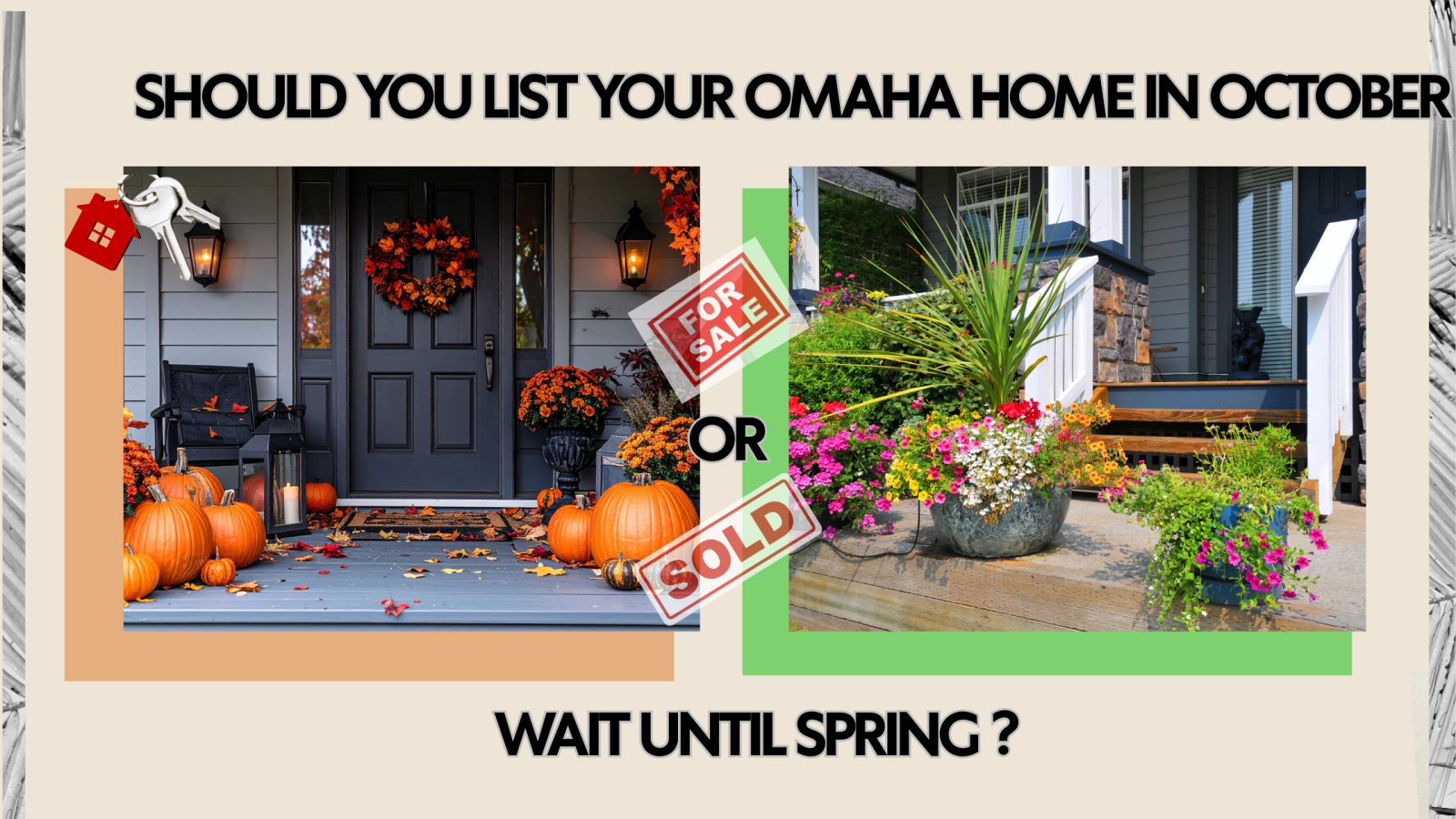
Should You List Your Omaha Home in October or Wait Until Spring?

by Nancy Heim-berg

It's a question we hear all the time at the Heim-Berg Team, usually from homeowners standing in their kitchen looking out at the fall leaves and wondering if they've already missed their window. The weather is getting colder, Halloween decorations are going up around the neighborhood, and conventional wisdom says spring is the time to sell a house. So, should you pack it in for the year and wait until the daffodils bloom?

Not so fast. We've helped hundreds of families sell their homes throughout the Omaha metro area, from the historic charm of Dundee to the newer developments in Elkhorn. Over the years, we've learned that the "spring is best" rule isn't nearly as absolute as most people think. In fact, listing your Omaha home this October might be one of the most intelligent decisions you could make.

Let's have an honest conversation about what's really happening in the Omaha real estate market right now and help you figure out the best timing for your specific situation.

Let's begin by talking about the Spring selling myth and why everyone thinks spring is the magic season for selling homes. There's some truth to it, sure. The weather is beautiful, flowers are blooming, lawns are green, and families with kids prefer to move during summer break. Historically, spring has brought more buyers into the market, resulting in increased competition among buyers and potentially higher sale prices. Drive through any Omaha neighborhood in April or May, and you'll see For Sale signs popping up like dandelions.

But here's what conventional wisdom misses. When spring is the busiest time for buyers, it's also the busiest time for sellers. That beautiful Saturday in May, when twelve families are out touring homes? There are probably twenty new listings for them to choose from. Your charming bungalow in Benson is competing with every other charming bungalow that just hit the market. More buyers sound great until you realize there are also many more options for those buyers to consider.

October is an entirely different story. We understand that when our clients tell us, there are fewer buyers actively looking right now. But there are also dramatically fewer homes on the market. What you may not know is that the buyers who are out there looking in October aren't the casual browsers planning six months. They're serious, motivated buyers who need to find a home, and they're facing limited inventory. When we list a well-prepared home in October, it often stands out in a way that the same home simply couldn't in the spring feeding frenzy.

So, who are these buyers who actually buy a home in the fall or winter? One of the biggest misconceptions about fall selling is that only desperate buyers are looking at it during this time of year. That's not true based on what we see every single year in the Omaha market. October through December brings out some of the most qualified, motivated buyers you'll ever encounter.

We're discussing corporate relocations that need to be finalized by year-end. These buyers often have company assistance with their move, they're financially solid, and they need to find something quickly. They can't afford to wait until spring, and they're usually more willing to pay fair market value for the right property because time is more important to them than squeezing out every last dollar innegotiation.

Then there are the buyers who've been searching since spring or summer and haven't found what they want. By October, they're getting serious. They've seen enough homes to know exactly what they're looking for, they're pre-approved and ready to move, and they're frankly a little tired of the process. When they find the right home, they act fast.

You also get buyers whose life circumstances have changed. Job promotions, growing families, divorces, or empty nesters who are finally ready to downsize don't wait for spring to start house hunting. Life happens year-round, and so does real estate.

Local buyers from right here in Omaha who want to take advantage of current market conditions are also out there. Some have been watching interest rates, some have finally saved their down payment, and some want to be settled before the holidays. These aren't tire kickers. These are people ready to buy.

When you list your Omaha home in October, you're working with several distinct advantages that don't exist in spring. Let's walk through what that looks like in practice.

The reduced competition means your home gets more attention. When there are only three or four comparable homes on the market in your neighborhood instead of fifteen, guess what? Buyers look at all of them carefully. Your home isn't getting lost in the shuffle. Every showing matters more, and buyers are taking each property seriously because they know their options are limited.

The buyers who are looking right now tend to move faster. In the spring, buyers often take their time, touring homes for months and waiting to see what else comes on the market. October buyers don't have that luxury. They know inventory is limited and winter is coming. When they like your home, they make offers quickly. We've seen fall sales move from listing to closing in six weeks, whereas the same scenario in spring might take three or four months, with showings and multiple contingencies.

Less competition also means fewer bidding wars, which sounds counterintuitive, but hear us out. While spring often brings multiple offers, these situations can work against sellers when buyers become frustrated and walk away entirely, or when deals fall apart during contingency periods. October typically brings more straightforward transactions with realistic buyers who make solid offers the first time.

There's also a psychological advantage to buyers touring homes in the fall. On a chilly fall afternoon in Omaha, your home feels especially comforting and appealing with the cozy fireplace crackling, as potential buyers walk in. Buyers can picture themselves living there during Nebraska winters. That emotional connection is harder to create when everyone's thinking about summer humidity, patios and swimming pools.

There are circumstances when selling in the current tax year makes more financial sense than waiting until the next year. Every situation is different, but it's worth discussing with yout tax professional and considering so you can make your best financial decision. From a practical standpoint, you can close before the end of the year, which offers you potential tax advantages.

In some situations, October listings just make sense, and we can usually identify them quickly when we sit down with sellers. If you've already purchased another home or you're relocating for work, waiting until spring could mean carrying two mortgages for months or dealing with the stress of temporary housing. The cost and hassle of waiting far outweigh any potential price advantage you might get from spring timing.

If your home is in move-in-ready condition right now, you've got a tremendous advantage. Fall buyers are often seeking homes they can move into quickly without extensive renovations. If your house looks beautiful today, why wait six months when it might not look as good after another winter of wear and tear?

Empty nesters with grown kids don't face the school calendar constraints that make spring so appealing to families. If that's your situation, you're competing in a less crowded market segment by listing now. The same goes if you don't have specific timing needs that require a spring sale. Sometimes the best time to sell is when you're ready.

Market conditions matter too. If Omaha inventory is particularly low right now and you know several comparable homes in your area just sold, striking while conditions are favorable can be smarter than gambling on what spring might bring. Our team constantly monitors Omaha real estate market trends, and we can provide you with specific data about your neighborhood so that you can make an informed decision.

Now, we're not going to tell you that October is always the correct answer, because it's not. Waiting for the Spring market may be a better choice for you. There are situations where waiting makes more sense, and part of our job is being honest about that.

If your home needs significant work before it can be listed, waiting might give you time to complete those projects properly. Rushing to get your home on the market when it's not ready never ends well. A spring timeline gives you winter to paint, update, repair, and stage your home so it looks its absolute best. Fall buyers are particularly unforgiving of deferred maintenance because they assume they'll be dealing with winter issues immediately.

Major exterior issues are especially problematic for fall listings. If your roof needs replacement, your siding is deteriorating, or your driveway is cracked and damaged, these problems are exacerbated when buyers are already considering winter. Nobody wants to close on a house in November and immediately face roof leaks during the first snowstorm. If you can address these issues over the winter and list everything in top shape by spring, that might be your best play.

Your personal timeline matters too. If you have nowhere to go and you're not in a hurry, why create unnecessary pressure? If you genuinely want to spend one more holiday season in your home or you're not emotionally ready to move yet, don't force it. Real estate should work around your life, not the other way around.

Families with school-age children face real constraints. Moving during the school year is genuinely harder on kids, and most families prefer to make the transition during summer break. If you have kids in Omaha Public Schools, Millard, or Elkhorn, and maintaining their school year stability is your priority, then listing in the spring and moving in the summer makes perfect sense. There's nothing wrong with timing your sale to coincide with your children's needs.

Local market conditions suggest waiting. If we notice a significant amount of inventory buildup in your specific neighborhood or price range, or if there are indications that spring may bring better conditions, we'll let you know. Sometimes patience is the right strategy, and we've never been afraid to advise our clients to wait when waiting is in their best interest.

If you decide to list this October, your approach should reflect the season and the buyer's mindset. This isn't the time for bright, airy summer staging. You want your Omaha home to feel warm, inviting, and move-in ready for fall and winter, so how can you make it shine in October?

Your home's exterior matters even more in October, as buyers are already considering how it will withstand Nebraska winters. Your lawn should be neatly maintained even as it goes dormant. Leaves need to be raked consistently, not just once. Your gutters should be clean and in good working condition. Any loose shingles, damaged siding, or cracked concrete needs to be addressed before listing. Buyers touring in October are mentally checking off winter preparedness, and any signs of neglect become bigger red flags than they would be in spring.

Create a welcoming entrance that conveys this home is well-maintained and ready for new owners. Seasonal touches, like mums on the porch or a tasteful wreath on the door, are delicate, so avoid overdoing it with Halloween decorations. You want buyers to picture themselves here, not admiring your creativity.

Inside, the goal is cozy but not cluttered. Natural lighting is more limited in the fall, so ensure all your curtains are open during showings and that every light in the house is on. We mean every light: table lamps, overhead fixtures, even closet lights. A bright home feels more welcoming and spacious, especially on gray October days.

If you have a fireplace, this is your moment. A fire during showings creates an ambiance that you literally cannot replicate any other time of year. Buyers walk into a warm home with a fire going, and they emotionally connect with the space. That feeling stays with them after they leave.

Temperature control is also essential. Your home should be comfortably warm but not stuffy. Around seventy degrees is perfect. Nothing turns off buyers faster than walking into a cold house on a chilly day. They'll assume the heating system doesn't work well, even if you've just turned it down to save energy.

The fall smell issue is real. Homes can smell musty or closed in when we no longer open windows regularly. Make sure your home smells fresh and neutral. Skip the pumpkin spice candles unless they're very subtle. Strong artificial scents suggest that you're trying to cover something up. Fresh, clean, and neutral always wins.

Your home should feel move-in ready, especially when it comes to winter systems. Buyers will want to know that the furnace, water heater, and insulation are all in good shape. Having recent service records available demonstrates that you have properly maintained the home, giving buyers confidence.

We believe that nothing is more important than the data and the numbers to get our clients top dollar for their home. Let's discuss what happens to home prices between October and spring in the Omaha market, as this is where a lot of confusion exists. Some people will tell you that homes listed in spring sell for more money, and that's sometimes true when you look at broad averages. But averages don't tell the whole story.

Spring does typically bring slightly higher average sale prices across the market, but that difference is often just a few percentage points, not the dramatic gap that makes waiting six months worthwhile. We typically discuss differences of two to four percent when comparing well-prepared homes in similar conditions.

Here's what really matters for your situation. What will your specific home sell for this October compared to next spring? That depends on your neighborhood, your price point, the condition of your home, and current local inventory levels. It also depends on what might happen in the market between now and spring. Interest rates could go up, making homes less affordable. More inventory could flood your neighborhood in spring, increasing competition. Economic conditions could shift. Nobody knows for sure.

You also have to factor in your carrying costs. Six months of mortgage payments, utilities, insurance, maintenance, and property taxes add up quickly. If waiting until spring costs you fifteen thousand dollars in carrying costs and your home might sell for ten thousand dollars more, you haven't really come out ahead. And that assumes everything goes perfectly and you sell quickly in spring, which isn't guaranteed.

There's also the value of having your money freed up sooner. If you sell in October and close by Thanksgiving, that equity is working for you six months earlier than if you wait for spring. Whether you're buying another home, investing, or just eliminating the stress of owning a property you're trying to sell, there's real value in getting the transaction done.

If you're genuinely torn about whether to list now or wait, you do have a middle path using the "prep now, decide later," hybrid approach we often recommend. Get your home ready to list this October. Get the inspection done, make the necessary repairs, declutter, stage, and prepare your home for sale. Take professional photos while the fall colors are still beautiful. Get everything ready to go.

Then sit down with us and look at current market conditions specific to your home. We can provide you with comparable sales from this fall, current active listings in your area, and offer realistic pricing guidance. We can also discuss what we're seeing in terms of buyer activity and inventory trends.

At that point, you can make an informed decision. You could list immediately because the conditions are perfect. You could wait a month and list right before Thanksgiving when inventory is at its absolute lowest. Alternatively, you could hold off until spring, but now your home is ready to go, and you've eliminated the stress of the spring rush.

The prep work isn't wasted regardless of your decision. Your home needs those repairs and improvements anyway. You'll get better photos in October than you will in gray, slushy March. And you'll have the peace of mind that comes from making a decision based on real information rather than assumptions.

At the end of the day, the right time to sell your Omaha home isn't determined by the month. It's determined by your needs, your home's condition, your local market conditions, and your goals. So trust YOUR situation and not the calendar. We've seen incredible sales happen in October, November, and even December. We've also seen spring sales that went precisely as planned. Both approaches can work beautifully when the timing matches the circumstances.

What doesn't work is making your decision based on outdated conventional wisdom or what your neighbor's cousin's friend did three years ago. The Omaha real estate market changes constantly, and what worked perfectly for someone else might not be the right move for you.

That's where having experienced local advisors makes all the difference.

We live and work right here in Omaha. We know these neighborhoods inside and out, from Dundee to Elkhorn, West Omaha, and Papillion. We see every listing, every sale, and every market shift as it happens. We're not sure whether the October listing makes sense for your specific home. We're examining real data from your actual neighborhood and providing you with honest guidance based on what we're currently observing.

Some agents will tell you whatever they think you want to hear to get your listing. We'd rather have an honest conversation up front and help you make a decision that's genuinely best for you, even if that means advising you to wait.

One thing we're sure about is that every client and every situation is unique. That said, if you're considering selling your Omaha home and you're not sure if listing in October makes sense or not, or if you should wait until spring, then give us a call to talk about your specific situation. We can assess your home, discuss your timeline, review the current market conditions in your neighborhood, and provide you with honest, data-driven guidance on the best approach for your situation.

October is ideal for you, and you could be under contract within a few weeks. Waiting makes more sense, and we can create a spring strategy that sets you up for success. Alternatively, there's a hybrid approach that offers maximum flexibility. We won't know until we talk, and that conversation costs you nothing but a bit of time.

The one thing we can promise is that we'll be straight with you about what we're seeing, what we recommend, and why. After decades of helping Omaha families navigate these exact decisions, we've learned that the best results come from honest communication and strategies tailored to each seller's unique situation.

Don't spend the next few months second-guessing your timing or wondering what you should do. Let's figure it out based on what's happening in the market right now and what makes sense for your life.

Contact the Heim-Berg Team at (402) 607-9024 or visit us at www.omahaarealiving.com. We're here to help you make the most intelligent decision about your home sale timing, and we're ready to guide you through every step of the process whenever you're ready to move forward.

Your Omaha home is one of your most valuable assets. Let's ensure you make the best possible decision about when and how to sell it.

Displaying blog entries 1-10 of 19

Syndication

Categories

Archives

Share This Page

Contact Information

Photo of Heim-Berg Team Real Estate
Heim-Berg Team
Berkshire Hathaway
331 Village Pointe Plaza
Omaha NE 68118
(402) 677-9024
(402) 679-7108 | (402) 830-6123
Fax: 402-493-4805

Stacey OHara CMG financial 515-306-2360


©2015 BHH Affiliates, LLC. Real Estate Brokerage Services are offered through the network member franchisees of BHH Affiliates, LLC. Most franchisees are independently owned and operated. Berkshire Hathaway HomeServices Ambassador Real Estate and the Berkshire Hathaway HomeServices Ambassador Real Estate symbol are registered service marks of HomeServices of America, Inc®. Equal Housing Opportunity. Equal Housing Opportunity Realtor License